
RESEARCH INTERESTS
I am interested in the study of intrinsically disordered regions of proteins and the impact of post-translational modifications in biology and pathology. In particular, my research area includes the study of proteins involved in neuro muscular degeneration, like androgen receptor in Spinal and Bulbar Muscular Atrophy. I am also interested in transcription factors biology and the effects of genetic mutations causing rare diseases. In order to achieve my goals, I use a multidisciplinary approach involving in vitro protein assays, cell biology, biophysics and proteomics.
SCIENTIFIC CAREER
Nov2025-actual:
Ricercatore III livello, Istituto di Biofisica, CNR, Milano.
2025 – 2037:
Habilitation to associate Professor in Molecular Biology (BIO/11)
Jun2025-Nov2025:
Ricercatore III livello, Istituto di Fisiologia Clinica, CNR, Milano
Jul 2021-Jun2025:
Senior Research Technician, Centre for Structural Biology, Fondazione Human Technopole, Milan
May 2021–Jun 2021:
Collaborator, Department CIBIO, Università di Trento,
Apr 2018– Mar 2021:
Assegnista di ricerca, Istituto di Biofisica, CNR, Trento
Sep 2015 – Mar 2018:
Post doc, Department CIBIO, Università di Trento
Oct 2013 – Aug 2015:
Post Doctoral Research Associate, University of Cambridge, UK
Oct 2010- Oct 2013:
Ricercatore a tempo determinato, Istituto di Biofisica, CNR, Trento
May 2009 – Oct 2010:
Collaborator, Fondazione Bruno Kessler, Trento
Mar 2009 – Apr 2009:
Collaborator, Dept of Biology, Università di Padova
2006 –2009:
PhD in Biochemistry and Biotechnology, Dept of Biology, Università di Padova
2005 – 2005:
Collaborator, CRIBI, Università di Padova
1999–2004:
MSc in Pharmaceutical Biotechnopogy, Università di Padova
PROJECTS
– Impact of phosphorylation on androgen receptor biology and pathology
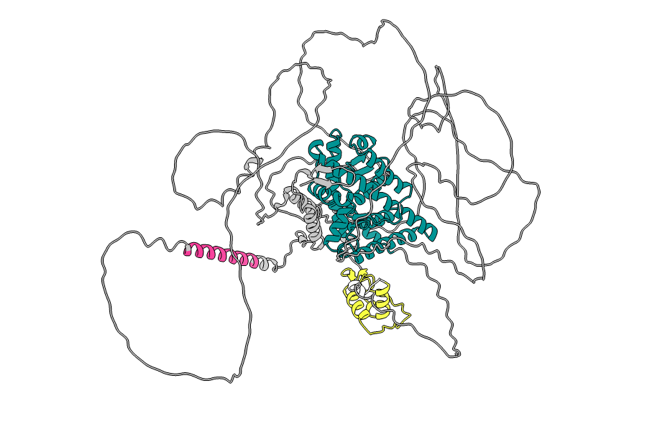
Androgen receptor (AR) is the transcription factor mediating the effects of androgens at genetic level. Like other nuclear receptors, it is organized in 3 main domains: the large N-terminal domain, disordered and with important regulatory functions, the well-structured DNA binding domain and the well characterised Ligand Binding Domain. It is linked to several pathological conditions: while the loss of function of the protein causes androgen insensitivity syndrome, the gain of function is triggering prostate cancer. In the case of expansion of a poly-glutamine stretch in the N-terminal domain, adult males develop Spinal and Bulbar Muscular Atrophy (SBMA).
AR is a heavily phosphorylated. One phosphorylation site is constitutive while the others are phosphorylated in response to androgens or other stimuli. Phosphorylation is able to tune, abolish or boost the activity of AR and it is also dysregulated in pathologies like cancer and SBMA. The project aims to characterize the effects of phosphorylation on AR at molecular level, using integrated structural, cell biology and omics approaches. The long terms objectives aim to contribute to the knowledge of AR basic biology and ways to find therapeutic strategies for AR linked diseases
– Analysis of the effects of FoxE1 mutations on thyroid biology
FoxE1 is one of the transcription factors orchestrating the development of thyroid gland together with Pax8, Nkx2.1 and Hhex. It is organized in folded (DNA binding domain) and disordered regions with unknown functions. In this project, several missense mutations on FoxE1 causing congenital hypothyroidism have been characterized to understand their impact on DNA binding, cell localization and transcriptional activity.
Collaborators:
- Dr. Manuela Basso, Università di Trento, Italy (primary neurons and in vivo models of disease)
- Prof. Maria Pennuto, Dipartimento di Scienze Biomediche, Università degli Studi di Padova; Venetian Institute of Molecular Medicine, Padova, Italy (cell biology and mouse models for Spinal and Bulbar Muscolar Atrophy)
- Prof. Xavier Salvatella, IRB, Barcelona, Spain (NMR spectroscopy, protein conformation, computational biology and phase separation biophysics)
- Dr. Mathew H. Horrocks, EaStCHEM School of Chemistry, University of Edinburgh, Edinburgh, UK; UK Dementia Research Institute, University of Edinburgh, Edinburgh, UK (fluorescence imaging tools for the in vitro and in cell detection of protein oligomers)
- Dr. Francesca Coscia, Centre for Structural Biology, Fondazione Human Technopole, Milan, Italy. E-mail: francesca.coscia@fht.org (structural biology)
- Dr. Carlotta Tacconi, Institute of Clinical Physiology, CNR, Milan, Italy. E-mail: carlotta.tacconi@cnr.it (physiopathology, vascular biology)
- Prof. Giorgio Arrigoni, Università degli Studi di Padova, Italy (Mass spectrometry and proteomics)
FUNDINGS
2020: AFM-Teléthon Trampoline Grant. Investigating poly-Glutamine expanded androgen receptor phosphorylation in muscle cells. Role: Proposing Researcher
2019: Kennedy’s Disease Association Grant, US. Role of Ser96 phosphorylation in androgen receptor pathogenesis. Role: Proposing Researcher
2016-2017: Akira Arimura Foundation 2016 PACAP Research Award, US. Targeting PACAP/AC/PKA/CDK2 axis to ameliorate spinal and bulbar muscular atrophy. Role: Proposing Post-Doc
2015-2017 Dulbecco Telethon Institute International Post-doctoral Programme 2015 as Marie Skłodowska-Curie COFUND actions, Italy. Targeting polyglutamine-expanded androgen receptor phosphorylation to modify protein aggregation and function. Role: Proposing Post-Doc
2010-2013 PAT Call Post Doc Outgoing 2009 – COFUND Marie Curie Actions, 7th Framework Program COFUND-GA-2008-226070, Italy. Single molecule fluorescence approach to study protein oligomer formation. Role: Proposing Post-Doc
SELECTED PUBLICATIONS
Piol, D. et al. Antagonistic effect of cyclin-dependent kinases and a calcium-dependent phosphatase on polyglutamine-expanded androgen receptor toxic gain of function. Sci. Adv. 9, eade1694 (2023).
Tosatto, L. et al. Single-molecule FRET studies on alpha-synuclein oligomerization of Parkinson’s disease genetically related mutants. Sci. Rep. 5, 16696 (2015).
Horrocks, M. H. et al. Single molecule fluorescence under conditions of fast flow. Anal. Chem. 84, 179–185 (2012).
Tosatto, L. et al. Alpha-synuclein pore forming activity upon membrane association. Biochim. Biophys. Acta 1818, 2876–2883 (2012).
Tosatto, L. & Coscia, F. A glance at post-translational modifications of human thyroglobulin: potential impact on function and pathogenesis. Eur. Thyroid J. 11,